
The Real Reason Companies Are Moving to Fabric
For years, organisations have invested heavily in becoming ‘data-driven’, with the expectation that better access to information will lead to better decisions. The intention has always been right, but for many, the reality has fallen short.
In many businesses today, data sits across a mix of platforms and tools, each introduced to solve a specific challenge at a specific point in time. What once felt like progress can gradually turn into a landscape that is difficult to manage, harder to govern and increasingly costly to maintain. Simplifying what already exists has become the priority, and it is a big reason the shift towards Microsoft Fabric is gaining momentum.
What is Microsoft Fabric?
Microsoft Fabric is Microsoft’s unified data and analytics platform, designed to bring together data integration, storage, analytics and reporting within a single environment. As organisations look to simplify increasingly complex data estates and prepare for AI adoption, Fabric is becoming a popular choice.
The Real Challenge: Getting to the Data
Some of the most valuable data sits inside bespoke, third-party systems such as CRMs, practice management platforms and line-of-business apps. These are rarely built with easy access in mind, so developers and data teams often can’t get to it directly.
The usual response is to hand-build a custom extract for each source, keep separate copies of the same data, and learn a different set of tools for every system. The effort adds up quickly: more pipelines to maintain, more duplicated data to manage, and more time spent on plumbing than on the actual analysis of the data.
And when it comes to applying AI to your data through agents and chatbots, data is messy and hallucination is the norm with the lack of a strong foundation of consolidated data.
What Fabric Does Differently
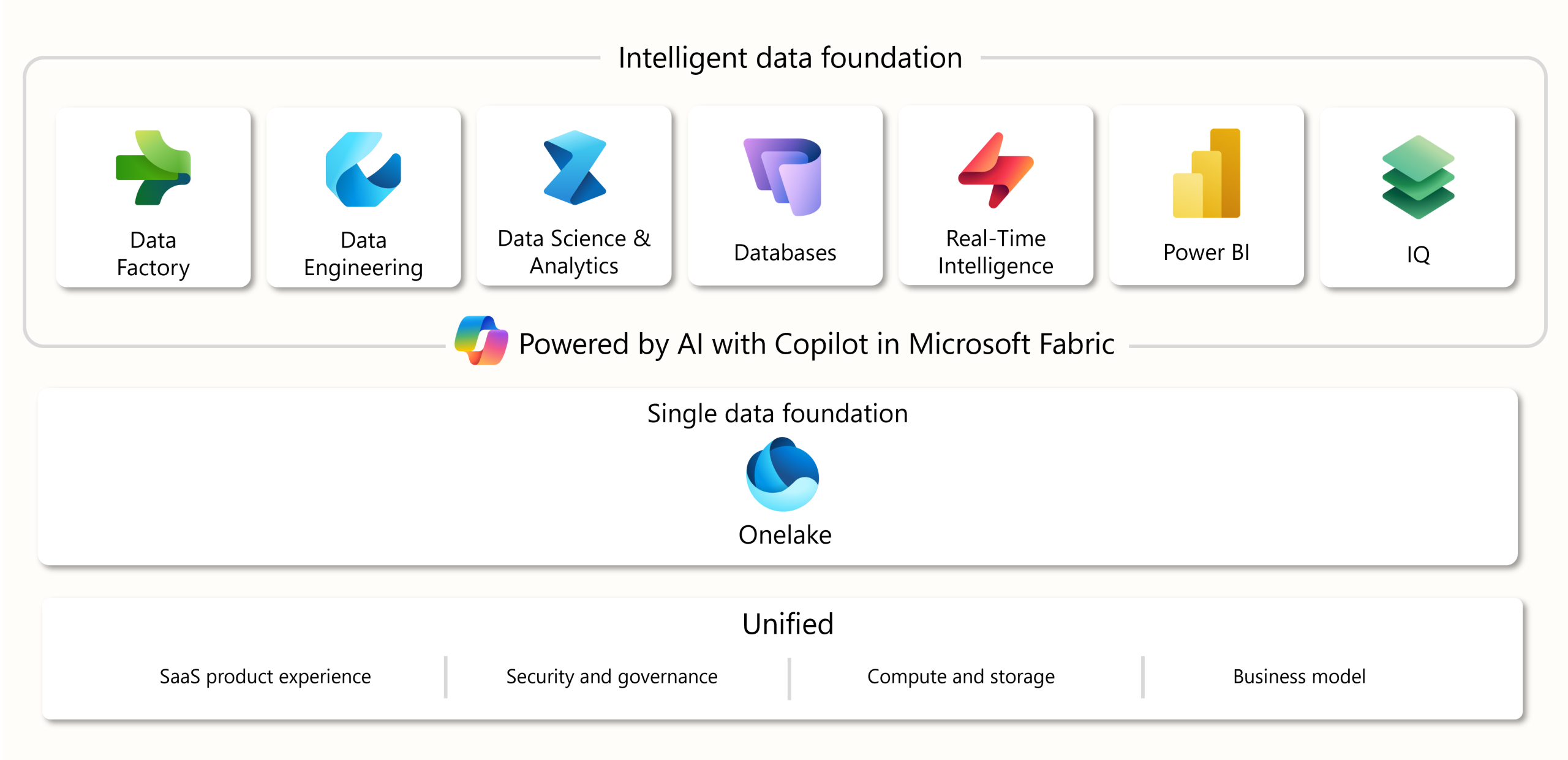
Modern data analytics platforms have evolved to bridge this gap between disparate source systems and differing tools for data analysis, with Microsoft’s Fabric data platform offering a ‘unified’ experience by combining ingestion, storage, data transformations, and reporting and analysis tools all under one system.
Low-code and no-code data ingestion
Data Factory makes it easier to connect data from existing business systems without extensive development effort, helping organisations quickly bring new data sources into reporting and analytics.
Mirroring and shortcuts for zero-copy access
Access and work with internal and external data without creating additional copies, making it easier to bring together information from bespoke and third-party systems for reporting and analysis.
A unified storage layer with OneLake
Data is stored in OneLake, often described as the “OneDrive for your business data”, providing a central location for analytics data and helping reduce complexity across different storage technologies and platforms. Storage can then be tailored to the use case:
-
- Lakehouse for large, unstructured datasets and data science workloads
- Warehouse for structured and modelled data
- SQL Database for heavy transactional workloads
Choice of analytics tools
Teams can analyse and visualise data using Power BI, T-SQL, Python, R, Excel and other familiar tools, helping different users work with data in ways that suit their existing skills and workflows.
Business context built into the platform
Organisations can store business context alongside their data, allowing Copilot and data agents to return more trustworthy answers with the appropriate guardrails in place.
Why This Matters Now
The importance of getting this right is increasing. Organisations are working with growing volumes of data, while expectations around speed, accuracy and accessibility continue to rise. An approach that reduces maintenance, avoids duplication and keeps teams in familiar tools is far better placed to keep pace as that complexity grows.
Why Quorum
Adopting a platform like Fabric is a significant step, and its impact depends on how well it is implemented and aligned to business needs. Quorum works with organisations to simplify their data landscape by identifying sources of complexity and areas where processes can be streamlined. From there, the focus is on designing a more connected approach, where data is more consistent, processes are repeatable and reporting better reflects business requirements.
Are You Wondering: Is Microsoft Fabric Right for My Business?
No matter how powerful the capabilities of Microsoft Fabric are and how simple it is to start building efficient data solutions, it is more important than ever to have a strong data strategy. The real value comes when business objectives and reporting requirements are understood across the organisation, with everyone aligning to a way of working with a data platform that keeps data secure, simplified and central.
Contact us today to speak to one of our data specialists for an initial discussion around your data architecture, reporting requirements and AI readiness.
AWARDS & RECOGNITION

FOLLOW US
CONTACT INFO
CONTACT INFO
Quorum
18 Greenside Lane Edinburgh
UK EH1 3AH
Phone: +44 131 652 3954
Email: marketing@quorum.co.uk
FOLLOW US
AWARDS & RECOGNITION